Dictionary • Restored Biblical Books • Pure Translation & Audio ReadingContemplative Soaking • Chronicles of Grace • Studies & Resources
Welcome to the Agapé-Logos critical exegesis, philological discovery, and contemplative immersion sanctuary. This independent project is dedicated to stripping away centuries of religious, legalistic, moralistic, and political varnish accumulated over the original Greek (NA28) and Hebrew (BHS) manuscripts, allowing the living water of the original message to shine forth: unconditional Grace (Charis) and the sovereign Love of the Covenant (Agapé).
"If you extract the precious from the worthless, you will be my spokesman."
Jeremiah 15:19 • 1 Thessalonians 5:21
🏛️ The 5 Pillars of the Ecosystem
📖 The Critical Dictionary (185+ Monographic Entries): Rigorous word-by-word analysis (Semitic roots, Koine Greek, secular historical contexts, and cross-examination by the 4 virtual Experts). Includes the 22 Hebrew Alphabet Letters and the complete **Stripped Parousia** series.
📜 The Stripped Bible (Naked Translation) & AI Audits: Fluid, continuous reading of 6 major biblical books (*Genesis, Exodus, Psalms, John, Romans, Galatians*), cleansed of dogmatic distortion and backed by our manuscript textual critique engine (NA28 vs Textus Receptus).
📰 The Chronicles of Grace & Diptych Series: 17 insightful essays and 5 major diptych series (*The Trap of Muscular Striving, The Phantom Debt, The Delusion of Divine Clocks, The Illusion of Spiritual Warfare...*) to deconstruct merit-based religion and rest in established victory.
🎧 Studio Audio Universe & Son's Paraphrase: Over 970 immersive audio meditations (*Suno Versions 1 & 2*) composed to bring theological truths from the mind down into the heart.
🔗 The Network of Grace & Clean Lexicon: Dynamic conceptual map interconnecting the 25 great covenant themes and a universal lexicon indexed by roots and Strong numbers.
Latest Developments & New Treasures
Major Feature
🎵 Gospel of John in Continuous Immersion (2h30+)
Immerse yourself in the complete Gospel of John through continuous sacred music — Over 2h30 of narrative and symphonic journey across 43 grand movements, enhanced with instrumental Selah Soaking interludes.
Exclusive
🔬 Grand AI Philological Audit of the Bible
Access a scientific textual critique engine directly from the Naked Translation. View manuscript variants (NA28 / BHS), international academic consensus, historical translation benchmarks, and export the AI Audit Prompt for your own research.
Naked Translation
📜 6 Complete Biblical Books Online
Explore the full text of Genesis (50 ch.), Exodus (40 ch.), Psalms (155 blocks), John (21 ch.), Romans (16 ch.), and Galatians (6 ch.), with exegesis toolkits and interactive typography controls.
Diptychs
📰 5 Major Diptych Chronicle Series
Explore 2-part thematic series: The Trap of Muscular Striving (Parts 1 & 2), The Phantom Debt Syndrome (Parts 1 & 2), The Illusion of Spiritual Warfare, The Delusion of Divine Clocks, The Faithful Servant, Spiritual Smog, and The Anatomy of a Toxic Mentality.
Sacred Alphabet
🔤 22 Mysteries of the Hebrew Alphabet (Otiyot HaKodesh)
All 22 full Aleph-Bet entries are online, unveiling the prophetic, pictographic, and messianic dimension of each Hebrew letter (Aleph to Tav).
Eschatology
✨ Eschatological Series: The Stripped Parousia
10 ground-breaking monographs restoring the present triumph of Grace over apocalyptic fears (Apantesis, Erchomenos, Apokatastasis, Maranatha, Apokalypsis, Synteleia, Epiphaneia, Harpazo, Eschaton, Sygkathizo).
Studio Audio
🎧 Over 970 Audio Tracks & Dual Versions (V1 / V2)
Each major term offers two distinct musical compositions with acoustic textures for distraction-free soaking.
How to Listen & Immerse Yourself in Audio
The Agapé-Logos ecosystem integrates a complete acoustic realm to transform intellectual study into a bath of Grace and contemplative rest (Soaking). Here are the 4 ways to access our meditations:
Recommended
1. 🌟 The Dedicated Full-Screen Player (player.html)
A standalone, distraction-free environment designed to play in the background during your day, prayer, work, or rest:
Volume-by-Volume Flow (1 to 6): Listen to an entire volume continuously without interruption.
Selah Mode (Contemplative Pauses): Automatically inserts acoustic instrumental interludes between tracks to let the Word resonate.
Exegetical Study Button: Switch with a single click from the active track to the complete dictionary entry.
Direct access: Available at the top of the sliding menu ☰ or via the golden button below.
At the top of each word entry, the upper bar gives you direct access to both studio versions of the term: 🎧 Audio meditation: [ ▶ Version 1 ] [ ▶ Version 2 ]
Verses
3. 💬 Interactive Verse Toolkits
Hovering or tapping a highlighted biblical reference opens the exegesis tooltip with instant playback for the Son's Paraphrase.
Docking
4. 🎵 Floating Docked Tab (Right Screen Edge)
While reading, the player stays discretely anchored on the right edge as a vertical musical tab 🎵. One click deploys the mini-player with volume and loop controls.
💡 User Guide & Practical Tips
Welcome to Agapé-Logos — At the Heart of Grace, Truth, and Rest. Discover a unique interactive platform to refresh yourself deeply in the Word of God, free from all guilt and religious burden.
Updates
🔄 1. How to Refresh the App & Clear Cache
When the site receives new studies or fixes, your device may sometimes keep an older cached version. Here is how to get the latest updates instantly:
📱 Installed App on Phone (PWA): Swipe down from the top of the screen (pull-to-refresh) or close and reopen the app.
🌐 Phone Browser (Chrome / Safari): Tap the ⋮ menu and hit Refresh 🔄, or swipe down.
💻 Desktop Computer (PC / Mac): Press Ctrl + F5 (Windows) or Cmd + Shift + R (Mac).
Multilingual
🌍 2. Multilingual & Instant Translation in Your Language
3 Integrated Official Languages (Texts & Studio Audios):
• English: Direct access on this page.
• French (Français): Click FR at the top.
• Spanish (Español): Click ES for Spanish.
Instant Translation into Any Language (Swahili, Portuguese, German, Italian...):
In Google Chrome on mobile or desktop:
1. Tap the three dots (⋮) top right.
2. Select "Translate..." and choose your preferred language.
✨ The entire site will be instantly translated on your screen!
The Sanctuary
🏛️ 3. The 4 Treasures to Discover on Agapé-Logos
📖 The Exegetical Dictionary (185+ Core Studies): Dive into original Greek and Hebrew roots (Agapé, Sozo, Katallagé, Cheirographon, Qavah...) through the eyes of 4 Experts (Philologist, Historian, Theologian, and Mediator).
💬 Interactive Verses & Poemia Insights: Click or touch any highlighted biblical verse to open the Poemia Translation and Son's Paraphrase ("My child...").
📰 The Chronicles of Grace: Liberating everyday reflections (The Muscular Striving Trap, The Phantom Debt, Religious Performance...) in the "Chronicles" menu.
🎧 Meditative & Soaking Audio Player: Warm acoustic music and voices with 2 versions: V1 dynamic spoken meditation and V2 deep contemplative immersion.
Data & Comfort
📶 4. Tips to Save Mobile Data & Listen Seamlessly
1. 📲 Install the App on Phone AND Computer:
• On Mobile: Tap "Install App" at the top.
• On PC/Mac: In the browser address bar, click "Install Agapé-Logos".
✨ All studies and verses are saved in your local memory to study offline without consuming cellular data!
2. ⏳ 10-Second Pause Buffer Trick (Zero Dropouts): When you start a track, press Play (▶), then immediately press Pause (⏸) for 10 to 15 seconds. The player preloads a buffer chunk so you can listen continuously without interruption.
3. 📶 Prefer Wi-Fi when available: Use Wi-Fi connections for soaking audio to preserve your mobile plan.
"Come to me, all who labor and are heavy laden, and I will give you rest."
— Matthew 11:28
🕊️ Stewardship & The Heart Behind Agapé-Logos
“A humble craftsman’s journey, freely offered so that every thirsty heart may rediscover the original freshness of Grace.”
🌱 1. A Journey Born from Inner Liberation
This project did not arise from human ambition, intellectual pride, or ecclesiastical titles. It was born from a deep personal transformation and a refining work that I sincerely believe was guided by the Spirit.
For a long time, like so many others, I carried the subtle burden of religious performance, the fear of not being “good enough,” and my own hesitations toward modern tools. The Father first had to break my own prejudices and let me experience the living reality of His unconditional love (Agapé): a love that never bargains, never waits for us to be flawless to welcome us, and deeply heals the soul.
Agapé-Logos is the grateful response of a man who was lifted up and wanted to open an oasis of rest for others.
🔍 2. A Loving Return to Source Texts (The “Precision Lens”)
For nearly two thousand years, the biblical text has often been weighed down by moralistic translations, human traditions, or misinterpretations that turned the Good News into a burdensome manual of anxiety and demands.
What we are experiencing today resembles the invention of the printing press during the Reformation: the press did not invent anything new in the sacred text, but it allowed everyone to read it directly. Today, modern technologies provide us with an extraordinary linguistic calculator—a precision lens to instantly explore original Greek (NA28) and Hebrew (BHS) roots.
This tool has only one goal: to strip away centuries of religious varnish and reveal the bright clarity of the raw text. Far from reinventing the Gospel, our endeavor is a rigorous, respectful return to the sources, anchored in the certainty that God’s heart has always been a heart of Grace.
🎨 3. Where Art Meets Rigor (The “Clutter” Anecdote)
My journey has never followed conventional paths: constantly pulled between an intense passion for visual art, drawing, writing, and an equally strong fascination with science, technology, and precise craftsmanship. For years, this creative effervescence felt like guilty clutter.
“One day, discovering a photograph of Albert Einstein working amidst seemingly chaotic stacks of manuscripts, an article explained that this vibrant overflow was directly tied to his creative intuition. It was an instant liberating breakthrough: I understood that the Father loved and welcomed me exactly as I was, with my sensitivity and varied passions, without expecting me to fit into a rigid conventional mold. From that newfound freedom arose the unstoppable drive to build Agapé-Logos.”
Today, I realize that this blend of artistic sensitivity, listening of the heart, and technical precision was precisely the prepared ground to build this sanctuary: living artwork for the eyes, harmonic meditations to soothe the soul, and rigorous philological insights to feed the mind.
🤝 4. A Sanctuary Designed Specially for You
Whether you are a longtime believer weary of legalistic demands, a Christian seeking deeper roots, or simply a seeker of truth longing for peace: this place is designed for you.
You will find no sectarian dogma here, no judgment, and no school controversies. You will simply find an invitation to lay down your burdens, explore unsuspected textual treasures, and marvel at the boundless depth of a love that surpasses all knowledge.
🕊️ “This project belongs to no denomination or institution: it is the living testimony of a heart set free by Grace, offered freely to anyone thirsty for a new breath.”
100%
✍️ Under review
Related Terms:
📖Réf. :...
Perspective Conceptuelle
Source Historique / Géographique
🧠 Conseil des Experts
Sélectionnez un expert pour obtenir son éclairage sur ce terme :
Le Philologue (Langues anciennes)Original Texts & Roots
Sélectionnez un expert ci-dessus pour lire son analyse.
Source originelle
💎 Le Précieux (Textes Originaux & Grâce)
Altération dogmatique
🕵️ Le Vernis(Traditions & Manipulations)
✥ Le Réseau de la Grâce
Explorez les connexions sémantiques entre les 91 concepts.
🖱️ Molette : Zoomer
🖱️ Clic + Glisser : Déplacer la carte
🔵 Bulle : Glisser le concept
Concepts
Structures
Temps/Destin
Lieux
✥ M'échapper
✥ Astuces du Réseau
💡 Comment explorer ?
Ce réseau relie les 91 termes du dictionnaire selon leurs proximités étymologiques et spirituelles.
🚶 Le Fil d'Ariane
Cliquez sur un concept, puis successivement sur ses voisins directs pour tracer un chemin sémantique lumineux. Le fil d'Ariane se dessine d'étape en étape.
💡 Astuces rapides :
Tout éteindre : Un clic sur le fond vide éteint le chemin et restaure le réseau.
Déplacer : Saisissez n'importe quel panneau par sa poignée ✥ pour le bouger.
Recentrer : Le bouton ⟲ en bas à gauche recentre la carte.
Sortie : Utilisez le panneau M'échapper pour revenir au dictionnaire.
Le Réseau de la Grâce
"Vous allez contempler la géométrie invisible de la faveur."
Explorez les fils d'Ariane qui relient les concepts philologiques. Suivez les chemins lumineux d'amour et de vérité à travers les 91 mots du dictionnaire.
📜 Goldsmith
100%
The Stripped Bible — Naked Translation
Restoration of the text free from religious, moralistic or guilt-inducing filters. A continuous journey of covenant and Grace.
L'Esprit Agape-Logos
"Si tu sépares ce qui est précieux de ce qui est vil, tu seras comme ma bouche." — Jérémie 15:19
Le langage est un instrument de pouvoir. Au fil des siècles, les textes originaux hébreux et grecs de la Bible ont été traduits, interprétés et figés sous le contrôle d'empires et d'institutions religieuses. Pour asseoir leur autorité, ces structures ont souvent remplacé la bonne nouvelle de la Grâce inconditionnelle par un système moraliste basé sur la peur du châtiment et l'accumulation des mérites.
Agape-Logos est un espace d'épuration critique. Nous décortiquons les termes clés des Écritures pour enlever le vernis dogmatique médiéval et romain et redécouvrir la fraîcheur originelle des textes.
📖 Étude Critique : Les Voyages de Paul
Découvrez comment l'Esprit de Dieu a stratégiquement exploité la géographie de l'époque et la richesse unique de la langue grecque commune (le trésor Kainos vs Neos).
Les Quatre Piliers de notre Démarche
🔬
1. Philologie Antique
Analyser le sens profane d'origine des mots grecs et hébreux (comme Ekklesia ou Metanoia) dans leur contexte civique et littéraire profane.
🏛️
2. Histoire Critique
Comprendre le rôle des conciles impériaux byzantins et romains (comme sous Constantin ou Justinien) dans la dogmatisation et le contrôle social.
📜
3. Traduction Comparée
Traquer les glissements sémantiques introduits lors du passage du grec relationnel au latin de la Vulgate juridique de Jérôme.
🕊️
4. Patristique de la Grâce
Redécouvrir la théologie de l'Amour universel et de la réconciliation (Apokatastasis) enseignée par les premiers Pères de l'Église de langue grecque.
Transparence Éthique & Illustration Numérique
Dans une démarche d'honnêteté intellectuelle et de rigueur critique, nous tenons à informer le lecteur sur la nature des visuels qui accompagnent ce travail :
Perspectives Conceptuelles : Ces images sont des œuvres d'art numériques générées numériquement. Elles matérialisent de façon symbolique les concepts théologiques épurés (la grâce fluide, le feu purificateur de la Géhenne, l'ouverture d'esprit de la Metanoia).
Reconstitutions Historiques : Afin de contourner les droits de reproduction complexes et garantir l'autonomie du site, les stèles greces, pièces de monnaie romaines et bas-reliefs présentés sont des **reconstitutions numériques artistiques**. Elles s'inspirent fidèlement de véritables pièces archéologiques, manuscrits et sites géographiques réels afin d'offrir une illustration pédagogique historiquement et culturellement cohérente.
Droits de Reproduction & Partage
La vocation d'Agape-Logos est la diffusion et le partage bienveillant de la connaissance. Nous autorisons et encourageons la libre reproduction de courtes sections de texte (citations, extraits de définitions ou d'analyses) pour vos propres études, articles de blog, sites web ou partages sur les réseaux sociaux.
⚠️ Condition d'utilisation : Toute reproduction, même partielle, doit obligatoirement être accompagnée de la mention de l'auteur (Franck Daireaux) et d'un lien hypertexte clair et fonctionnel pointant vers l'encyclopédie (vers la fiche du mot concerné ou vers la page d'accueil https://www.agapelogos.org), afin de permettre à vos lecteurs d'explorer le contexte complet.
🕊️
RECONNAISSANCE & GRÂCE
Un Grand Merci pour Votre Élan !
Votre don a bien été enregistré avec succès et un reçu de confirmation vous a été envoyé par e-mail par PayPal. Votre élan est accueilli avec une immense joie et une profonde reconnaissance devant Dieu. Grâce à votre soutien précieux, les heures de recherche philologique, l'hébergement du site, la création d'images poétiques haute qualité et les méditations audio continuent d'être offerts librement à tous.
🕊️ ÉCLAIRAGE POEMIA : 2 Corinthiens 9:8
📜 MON POEMIA :
« Et Dieu a le pouvoir de faire surabonder toute étreinte d'amour (Charis) envers vous, afin qu'ayant toujours et en toute chose un contentement paisible (Autarkeia), vous débordiez pour toute œuvre gracieuse et féconde. »
פLA PARAPHRASE DU FILS :
« Je suis la source inépuisable qui fait surabonder Ma Grâce dans ta vie. Tu n'as pas à craindre le manque ni à compter avec anxiété : Mon Amour te comble d'une paix si pleine et d'un repos si profond que ta vie devient tout naturellement un débordement joyeux et généreux pour ceux qui t'entourent. »
Découvrez et téléchargez nos études approfondies au format PDF. Ces ressources sont le fruit de dizaines d'heures de recherche philologique et critique.
📜
L'Esprit et les Voyages de Paul
Analyse critique de la stratégie d'implantation et de la richesse unique du grec commun (le trésor Kainos vs Neos).
Format : PDF (24 pages) | Contribution libre
🔥
L'Apokatastasis chez les Pères Grecs
Une enquête patristique sur l'espérance de la restauration finale de toutes choses chez Grégoire de Nysse, Origène et Clément d'Alexandrie.
Format : PDF (38 pages) | Contribution libre
💎
Agape & Charis : La Grammaire de la Grâce
Comment le latin juridique de la Vulgate de Jérôme a déformé le vocabulaire de la faveur inconditionnelle en un système de comptabilité morale.
Format : PDF (18 pages) | Contribution libre
🔤 Lexique Épuré
Retrouvez ici tous les mots analysés dans le dictionnaire, leurs traductions épurées (sens riche) et la liste des versets où ils sont restaurés.
🔍
Concept
Translittération (Langue)
Traduction Épurée (Sens Riche)
Code Strong
🏛️ Concordance Strong Exhaustive
Les racines hébraïques et grecques décapées à la lumière de la Grâce — 244 piliers d'orfèvrerie indexés sur les 14 300 racines bibliques.
🔍
Chargement des fiches Strong...
✉️
Contact & Signalements
Une coquille exégétique, une erreur de traduction, une suggestion de nouveau terme ou un message d'encouragement ? Utilisez ce formulaire direct ou écrivez-nous par e-mail.
Réflexions critiques, éclairages étymologiques et méditations de la Grâce partagés sur les réseaux et notre journal éditorial.
100%
Chronicle30 août 20264 min de lecture
Article Title
Hook Subtitle
Image caption...
THE AGAPE LOGOS JOURNAL
Follow the journal on Substack, subscribe to receive an email for each new article.
In-depth treatises, clinical studies, notes, insights, etc.
🌐 Read all our publications translated into 20+ languages: select your preferred language directly at the top of any post on Substack (English, Français, Español, Deutsch, Italiano, Português, Nederlands, Polski, العربية, 日本語, 한국어, 中文...).
Franck Daireaux•October 5, 2026🌐 All languages available
ANALYSIS OF A FALL
From analyzing a failure to analyzing its analysis: what if the deepest reflection concerned a system masking its own structural weaknesses?
An uncompromising clinical and maieutic dissection: when the public collapse of a celebrated young preacher exposes the trap of premature foundations, the sacred actor's mask, and the vital need for filial rest.
CROWNING & HARVEST
Franck Daireaux•October 4, 2026🌐 All languages available
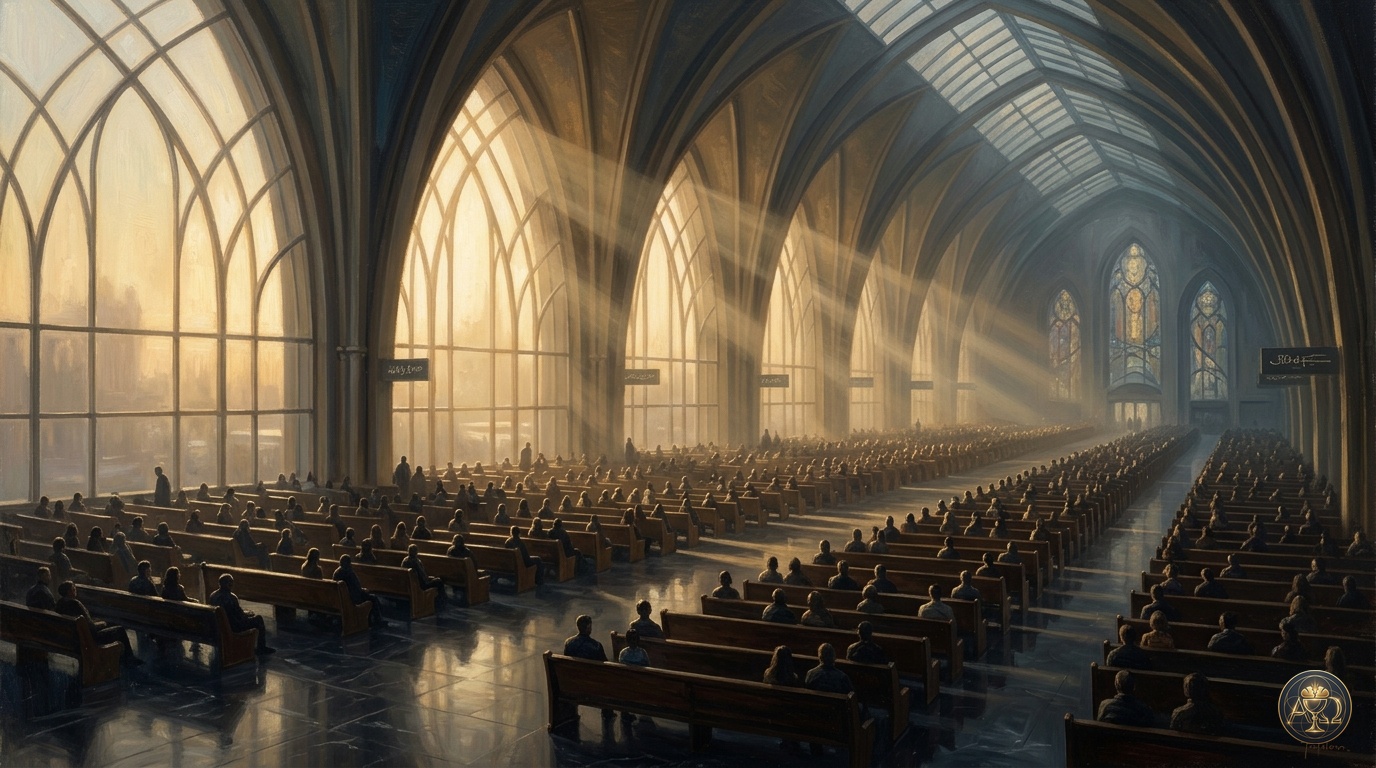
THE GOLDEN FIELD AND THE FATHER'S BANQUET
Leaving the concrete bunker, overcoming the terror of the rapture, and standing in the harvest of Agapé
The crowning of filial freedom: exposing the racket of eschatological fear, moving beyond cynical isolation, and entering the boundless feast of Abba who fills His house with joy.
CLINICAL & PROPHETIC STUDY
Franck Daireaux•October 4, 2026🌐 All languages available
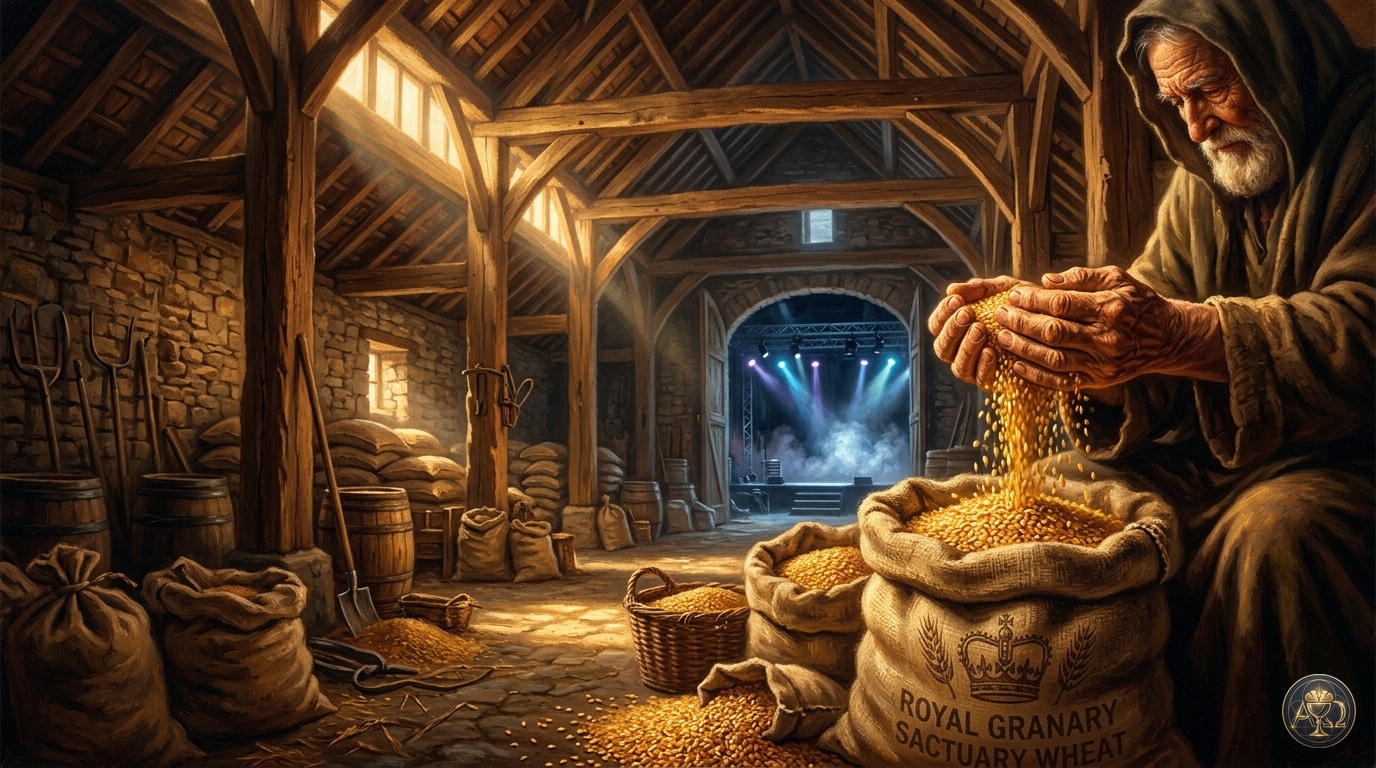
THE REJECTED BROTHER'S RESERVE & THE COMING JOSEPHS
Why famine strikes religious enclosures and how the emerging generation recognizes pure grain
The sacred paradox of the reserve: why God never places His grain where men establish their headquarters, and how the younger generation turns away from slogans to seek living bread.
MANIFESTO & CALLING
Franck Daireaux•October 4, 2026🌐 All languages available
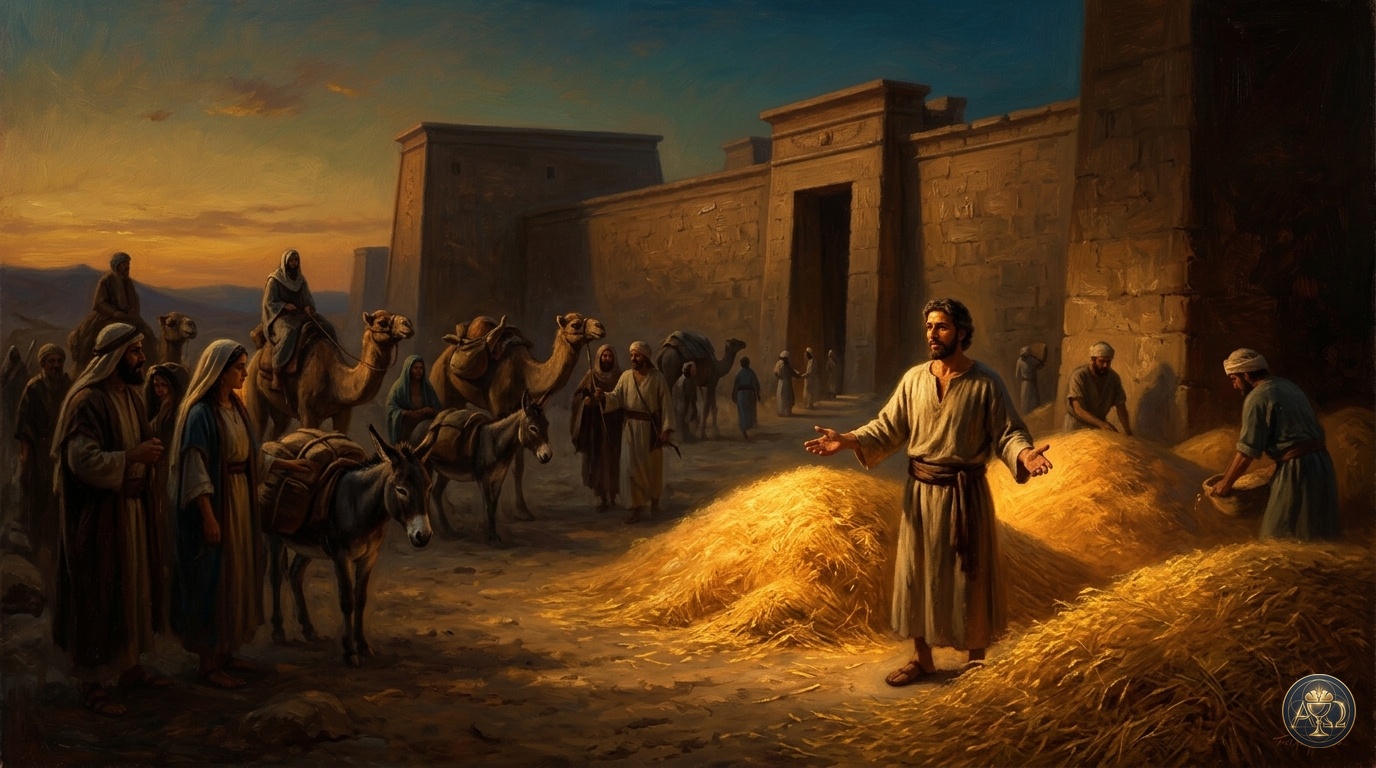
THE CALL TO TODAY'S JOSEPHS
Emerging from the dungeon, putting on the robe of light, and unlocking the storehouses of heavenly grain amidst religious chaos
When spiritual famine strikes religious pens: how God prepares today's Josephs in secret to open the storehouses of unadulterated grain and feed those who thirst.
TESTIMONY & LIBERATION
Franck Daireaux•October 4, 2026🌐 All languages available
From Naked Thirst to Shattered Armor
From traditional Catholicism to the impact of grace: laying down Saul's armor
The journey of deliverance: how to cast off the iron armor forged by human religion, tollbooths, and spiritual control to recover filial rest and heartfelt freedom.
QUAGMIRE MANUAL
Franck Daireaux•October 3, 2026🌐 All languages available
The Dream of the Heavenly Airport: When Religion Amputates Both Legs
The pawnification of the flesh, the razor grid, and the trafficking of souls
The clinical autopsy of a spiritual dream: the guilt scanner, the false ceiling door to heaven, and the definitive exit from the religious chessboard into the true open Door in Christ.
Lettre d'Information
Abonnez-vous pour recevoir régulièrement nos dernières décortications philologiques et études de la Grâce.
Respect for your privacy
We use Google Analytics to understand how our encyclopedia is consulted and to improve it. Do you accept the use of cookies for anonymized statistics?
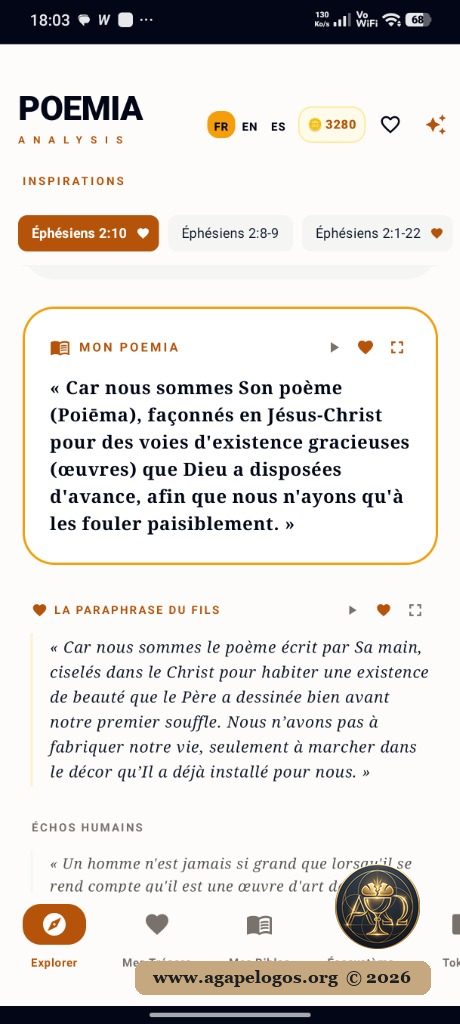
🕊️Éclairage Poemia
📜 Mon Poemia (Traduction étymologique)
...
פ La Paraphrase du Fils
...
📲
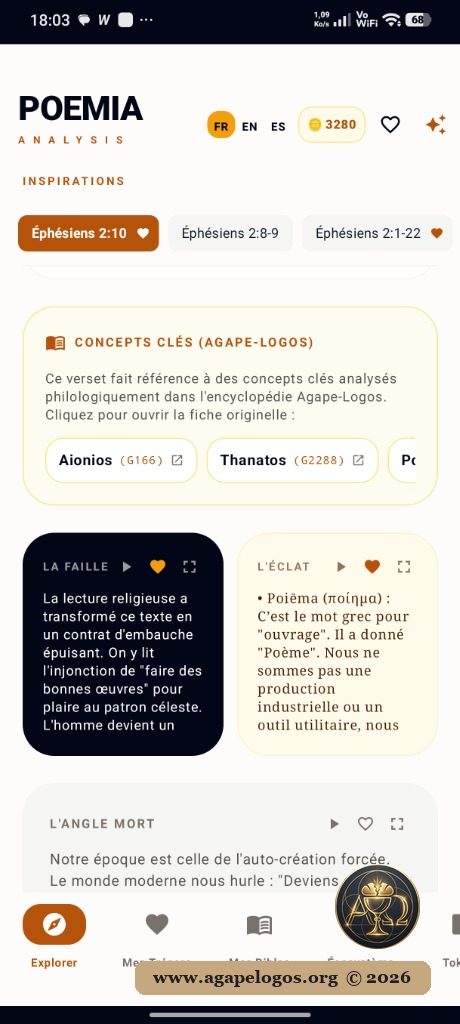
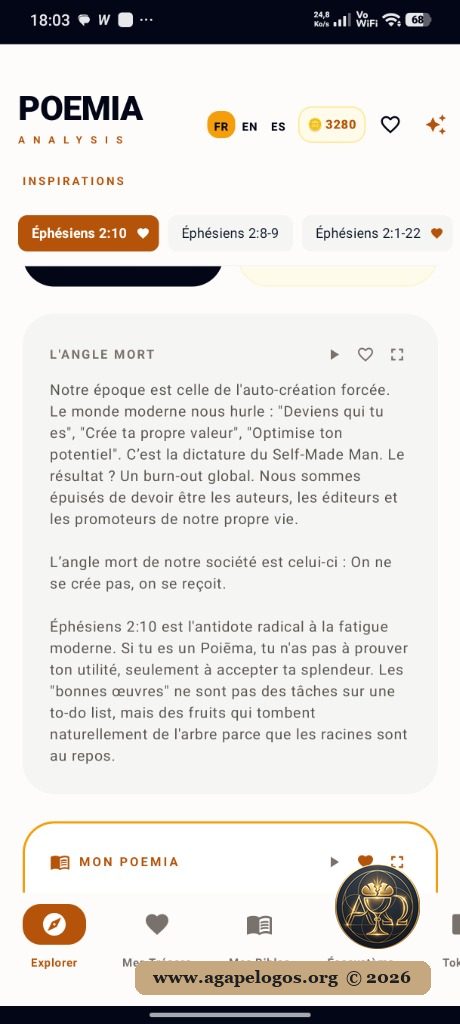
Application Poemia Android
⚠️ Application en cours de construction
L'application mobile est actuellement en cours de développement.
🤖 Visuel conceptuel assisté par IA (Art. 50 EU AI Act)
🔬 AUDIT PHILOLOGIQUE & CRITIQUE COMPARATIVE IA
Le Grand Audit IA des Traductions Bibliques
Confrontation directe aux manuscrits originaux (NA28 / BHS), détection des biais théologiques et décontamination des filtres juridiques latins.
🔬 Scientific Protocol & Textual Independence
The audit operates through automated and morphosyntactic comparative analysis between the Greek text Nestle-Aland 28th edition (NA28), the Masoretic Hebrew Biblia Hebraica Stuttgartensia (BHS), and target versions.
⚖️ Comparative Matrix of 8 Historical Versions
Multi-criteria evaluation: textual grounding, fidelity to verbal diatheses, detection of dogmatic filters, and Grace score.
⚖️
Mentions Légales & Transparence IA
🏛️ Éditeur du site
Agape-Logos — Encyclopédie et dictionnaire philologique, théologique et poétique.
Directeur de la publication et Éditeur : Franck Daireaux
Hébergement : Vercel Inc. — 440 N Barranca Ave #4133, Covina, CA 91723, USA (Plateforme globale Cloud).
🤖 Transparence & Conformité IA (Règlement UE 2024/1689 — EU AI Act)
Conformément à l'Article 50 du Règlement Européen sur l'Intelligence Artificielle (EU AI Act) relatif à la transparence des contenus synthétiques et assistés par IA :
Assistance documentaire et linguistique : Les synthèses philologiques, analyses historiques et traductions de travail reposent sur l'assistance de modèles de langage (IA générative de pointe).
Créations visuelles conceptuelles : Les représentations graphiques et visuels conceptuels illustrant les fiches et études sont générés par des outils d'IA visuelle sous le contrôle éditorial du projet.
Supervision humaine et paternité : Les orientations théologiques, les traductions étymologiques officielles (Mon Poemia) et les paraphrases relationnelles (La Paraphrase du Fils) sont conçues, dirigées et validées par l'auteur Franck Daireaux.
In the spirit of sharing and spreading the message of Grace, partial reproductions and short quotes (monograph excerpts, restored verses, the Son's paraphrases, chronicle extracts) are freely authorized and encouraged for personal study, preaching, teaching, blogs, or social media sharing, under the following express conditions:
Mandatory attribution: Explicitly credit the author (Franck Daireaux) and work (Agapé-Logos — Mon Poemia / The Son's Paraphrase).
Source link: Include a direct, functional hyperlink to the relevant entry or to the official site (https://www.agapelogos.org/en).
Textual integrity: Do not distort the text or take it out of its Covenant context.
Reasonable quantitative limits: Quotes must remain proportional (short excerpts, targeted verses or paragraphs, without copying whole chapters).
⚠️ Complete reproduction of full articles, bulk scraping/dumping of the database, or commercial exploitation (print publishing, resale, inclusion in third-party paid apps) strictly requires prior written permission from the author.
🛡️ Protection des Données Personnelles & Cookies (RGPD)
Le site Agape-Logos respecte la vie privée et le Règlement Général sur la Protection des Données (RGPD). La mesure d'audience par cookies est gérée via Google Analytics uniquement après consentement préalable (modifiable via le bandeau de préférences). Afin de garantir la rapidité et la stabilité technique de l'encyclopédie, des outils de mesure de performance 100% anonymes et sans dépôt de cookies (Vercel Web Analytics & Speed Insights) sont également utilisés conformément aux préconisations de la CNIL. Aucune donnée personnelle n'est vendue ni cédée à des tiers.
📲 Install Agape-Logos App
Je Soutiens le Projet
100%
Les centaines d'heures de recherche documentaire et philologique, le développement et la programmation, l'hébergement du site, la création d'œuvres visuelles haute définition et la composition des méditations musicales immersives demandent des moyens réels et une immense énergie de concentration quotidienne.
Si ce travail résonne en vous, vous fait du bien et nourrit votre marche, de grâce, faites-le connaître autour de vous... Vous pouvez aussi nous soutenir par une contribution libre, ponctuelle ou régulière.
Nous accueillons chaque don, même le plus modeste, avec une profonde joie et comme un signe précieux d'encouragement — venant de celui qui a trouvé ici une nourriture bienfaisante et qui désire voir ce champ spirituel continuer à porter une herbe grasse et abondante pour restaurer les cœurs.
"L'Écriture dit : Tu ne muselleras point le bœuf qui foule le grain, et : L'ouvrier est digne de son salaire." — 1 Timothée 5:18 / 1 Co 9:9 (Dt 25:4)
"Que chacun offre ce qu'il a résolu en son cœur (Lev), sans regret ni contrainte (Anagkē), car Dieu aime celui qui donne d'un cœur joyeux (Hilaros)." — 2 Co 9:7 (Poemia)
"Que personne ne se charge de plus qu'il ne le peut ; la Grâce ne connaît aucune obligation, seulement le repos d'un élan spontané du cœur, et la certitude que l'Amour nous précède là où nous nous retrouverons tous dans la joie de notre Auteur." — Franck (Auteur d'Agapé-Logos)
 Agape-Logos